Nature leads the way in £70,000 watercourse improvements

Willow, soil and natural planting are being used to strengthen sections of local burns as part of a £70,000 programme of watercourse improvements across the Falkirk Council area.
The work, carried out along the Grange Burn, Chapel Burn and Almond Pow, focuses on stabilising eroding banks, keeping water moving during heavy rain and helping the burns recover in a more natural way while also encouraging biodiversity.
Rather than relying solely on hard engineering, the project used willow stakes, natural fencing and soil-filled ‘veg bags’ to reinforce vulnerable sections of bank while allowing vegetation to establish over time.
What’s been done
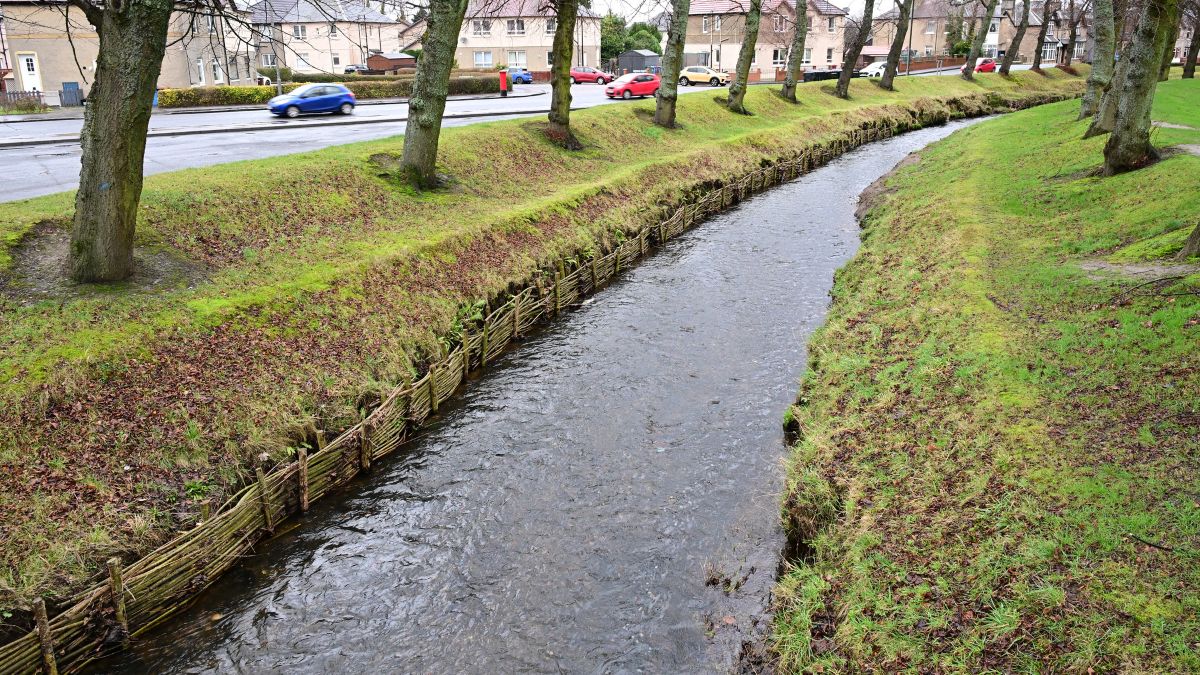
Along the Grange Burn in Grangemouth, around 200m of willow staking and low fencing were installed where sections of the bank had begun to overhang the water.
At Chapel Burn, which flows through Larbert, Stenhousemuir and Carronshore, damaged bank protection near the public footbridge was replaced and extended to help steer water away from the bridge foundations. On a nearby tributary, vegetation clearance allowed new willow staking and fencing to be installed, helping rebuild the bank and slow water movement during high flows.
Shorter stretches of soil-filled ‘veg bags’ - 10m on the Grange and 15m on the Chapel Burn - add further protection and stability to the watercourses.
Along the Almond Pow near Falkirk Stadium, work focused on managing vegetation and removing sediment to keep water flowing freely and reduce the risk of blockages during heavy rainfall.
How it’s performing
A site visit to the Grange Burn this month (February 2026) showed that the willow stakes had not been damaged by winter water levels. Due to this, these natural barriers will now be used along other local waterways including on sections of the River Carron to help protect its banks.
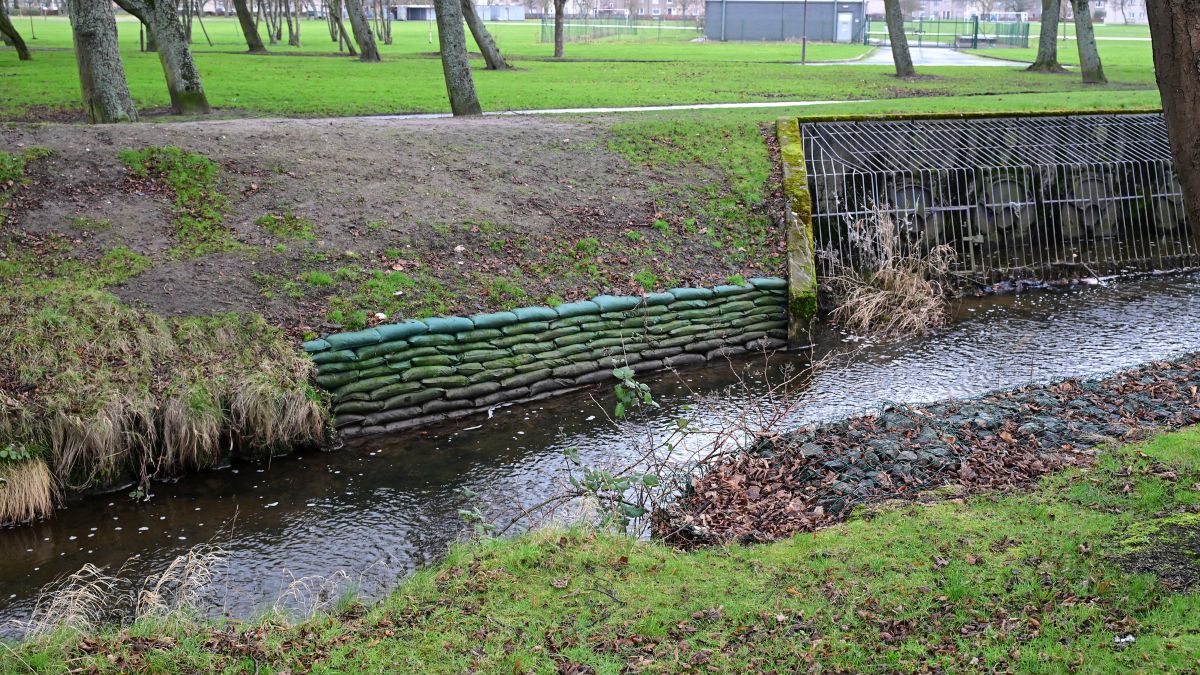
The visit also checked retaining walls ahead of the soil-filled ‘veg bags’ being seeded in spring which will encourage grass cover and help the bags blend into the natural bank. Over time, the vegetation is expected to match the surrounding area.
Part of a wider approach
The project follows routine watercourse inspections that flagged the Chapel and Grange burns as priorities for intervention.
It forms part of the Council’s wider programme of water management improvements, which includes the installation of leaky barriers in the Glen Burn to slow water flow and reduce downstream flood risk.
Cllr Bryan Deakin, spokesperson for Climate Change, said:
This work shows how we can adapt to heavier rainfall and changing weather in practical, sustainable ways. By using living materials like willow alongside traditional defences, we’re protecting local paths, bridges and homes while keeping carbon down.
“It’s part of a wider programme of small, sustainable interventions, from leaky barriers to bank stabilisation, that together make a real difference to how our communities manage water. These projects are cost-effective, low impact and help build resilience for the future.