Spotlight on our teams: The Castings Supported Accommodation Team

Having somewhere safe to live gives us a foundation for so much else in our lives. When that security is lost, even everyday tasks can become difficult, and knowing where to turn for help is not always straightforward.
My latest Spotlight visit took me to The Castings, where our supported accommodation team helps people who are experiencing homelessness regain stability and work towards independent living.
Supported Accommodation Coordinator Lesley Forbes is supported by Assistant Supported Accommodation Coordinators Stuart Boyce and Stewart Aikman along with key workers Julie Dickson, Gail Ralston, Joanne Kinnon, Claire Cairns and Rochelle White. There is also a team of night shift staff as well as weekend and evening staff as The Castings operates 24 hours a day, seven days a week.
What struck me most was the care at the heart of their work. Staff support people at some of their most vulnerable moments, taking time to understand their circumstances and treating them with empathy and without judgement.
A place that feels like home
During the visit, I got the feeling that The Castings felt "more like a home and less like an institution".
For someone arriving feeling distressed or uncertain, their surroundings can make a difference to how comfortable they feel and how willing they are to accept support.
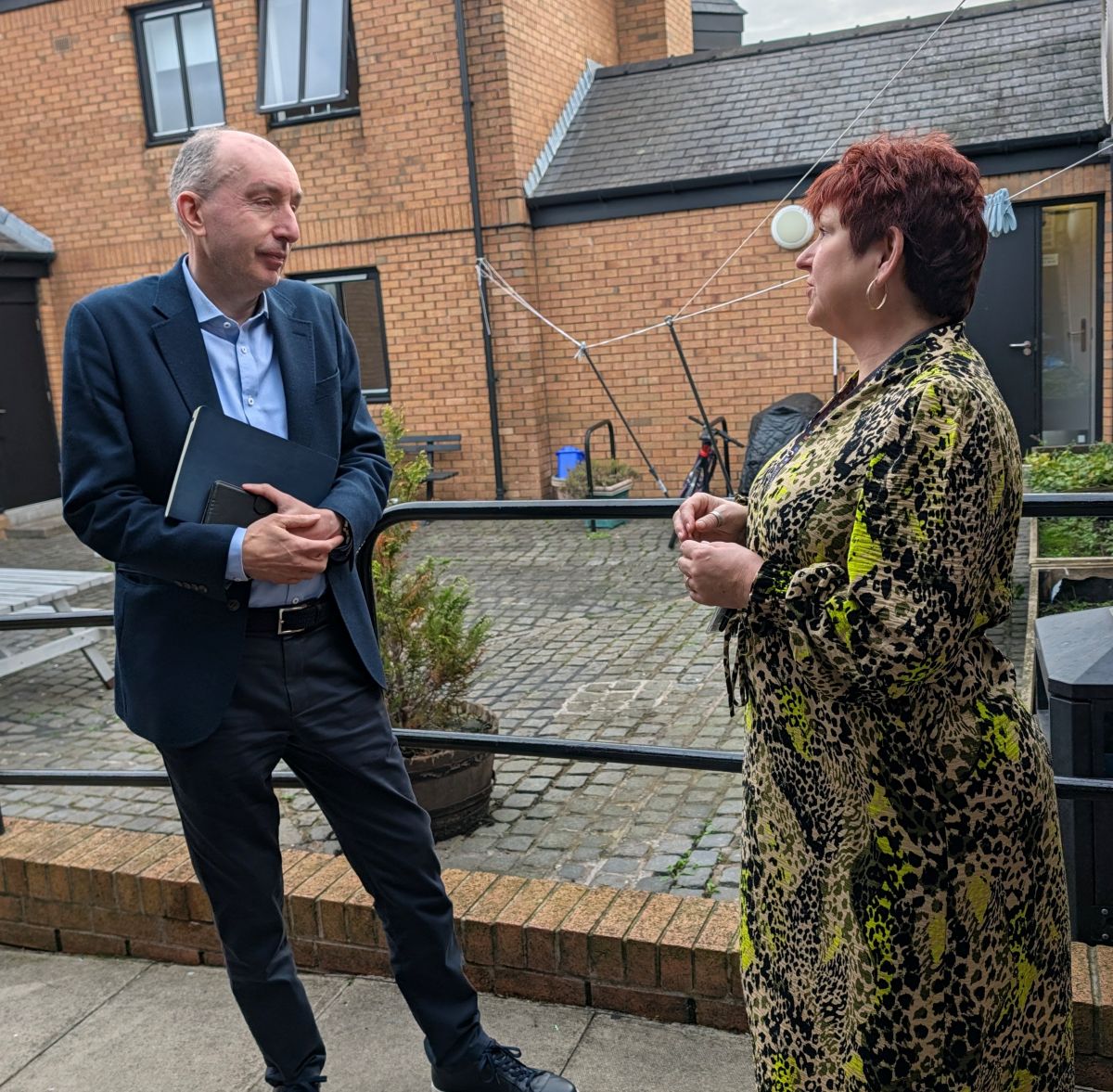
I was pleased to hear how residents are encouraged to get involved in projects around The Castings. In the courtyard, residents have been helping to maintain the area and the cobbles which were laid when the building was originally built, helping to create an attractive outdoor space while contributing directly to their environment.
The project reflects the team's belief that people are more likely to value and care for a place when they have played a part in shaping it. It also provides an opportunity for residents to build confidence, develop practical skills and experience the satisfaction of seeing the results of their efforts.
One comment from the team captured this well: "If you make a place look nice, people take pride in it and tend to respond to that."
The five flats at The Castings have all been decorated using a psychologically informed colour scheme. Each flat has a shared kitchen and bathrooms - three of the flats have six bedrooms and the other two flats have three bedrooms.
Looking after a place shows the people living there that they matter. It can encourage pride and help create a sense of belonging when much else in their lives feels unsettled.
That thoughtfulness reflects the team's wider trauma-informed approach to supporting residents.
Seeing the person
People arrive at The Castings with very different experiences.
Some have experienced homelessness repeatedly. Some have just been released from prison while others have never managed a tenancy of their own or are struggling emotionally following the loss of their home or even the breakdown of a relationship.
The team takes time to understand what each person needs. Someone who has managed a home for years may still need considerable support to cope with the distress of losing it.
Staff may know a resident's background or have supported them before, but they approach each person with an open mind. Previous difficulties do not remove the opportunity to build trust and make progress today.
That willingness to give people another chance stayed with me.
The team's understanding of trauma helps them recognise what may sit behind someone's behaviour. Responding with patience and empathy, while maintaining appropriate boundaries, requires considerable skill and professional judgement.
Much of the support the team provides is practical.
Helping people find their feet
Staff help residents obtain identification, open bank accounts, access benefits and register with a GP. They also support people to attend appointments and develop the everyday skills needed to manage a home.
These are things many of us take for granted. But without identification, an income or the confidence to ask for help, they can become significant barriers.
Working through these challenging issues with someone who is there to provide support can be an important first step towards greater independence.
The team uses a visual tool called Outcome Star to agree actions with residents and review progress together. It helps people recognise what they have achieved and where they still need support.
There is no timetable for rebuilding stability. An appointment attended or a bank account opened may represent a considerable achievement for the person involved.
Difficult but rewarding job
I was interested to learn that key workers shifts are now scheduled during business hours Monday to Friday so they can contact the services the residents they support need most. Lesley told me that this is a practical change that helps coordinate support around people's needs as well as giving the key workers a better work balance.
Despite dealing with emotional challenges on an almost daily basis, the key workers told me that although their job can be difficult, it is also very rewarding.
It is an honest description of a role that requires care and resilience.
Alongside supporting residents, the team handles out-of-hours requests for emergency homeless accommodation across Falkirk. Staff assess circumstances and arrange accommodation where needed, often when someone is in crisis.
Supporting those doing this demanding work matters too. Managers provide help during major incidents, while debriefs allow colleagues to talk through difficult situations and identify learning together.
These visits repeatedly remind me of the knowledge and commitment within our workforce.
At The Castings, I was particularly struck by the empathy staff bring to their roles. They recognise the person behind the circumstances and understand that rebuilding stability takes time.
I would like to thank the team for welcoming me and sharing their work so openly.
The care they put into the surroundings at The Castings is reflected in the care they show residents. Both help people feel valued, regain confidence and begin to think about their next steps.